Quiet Fabrics Are the Underused Upgrade for Restful Homes
Acoustic textiles can make open living spaces calmer without visible gadgets or major construction. The best results come from layered fabrics, not a single decorative panel.
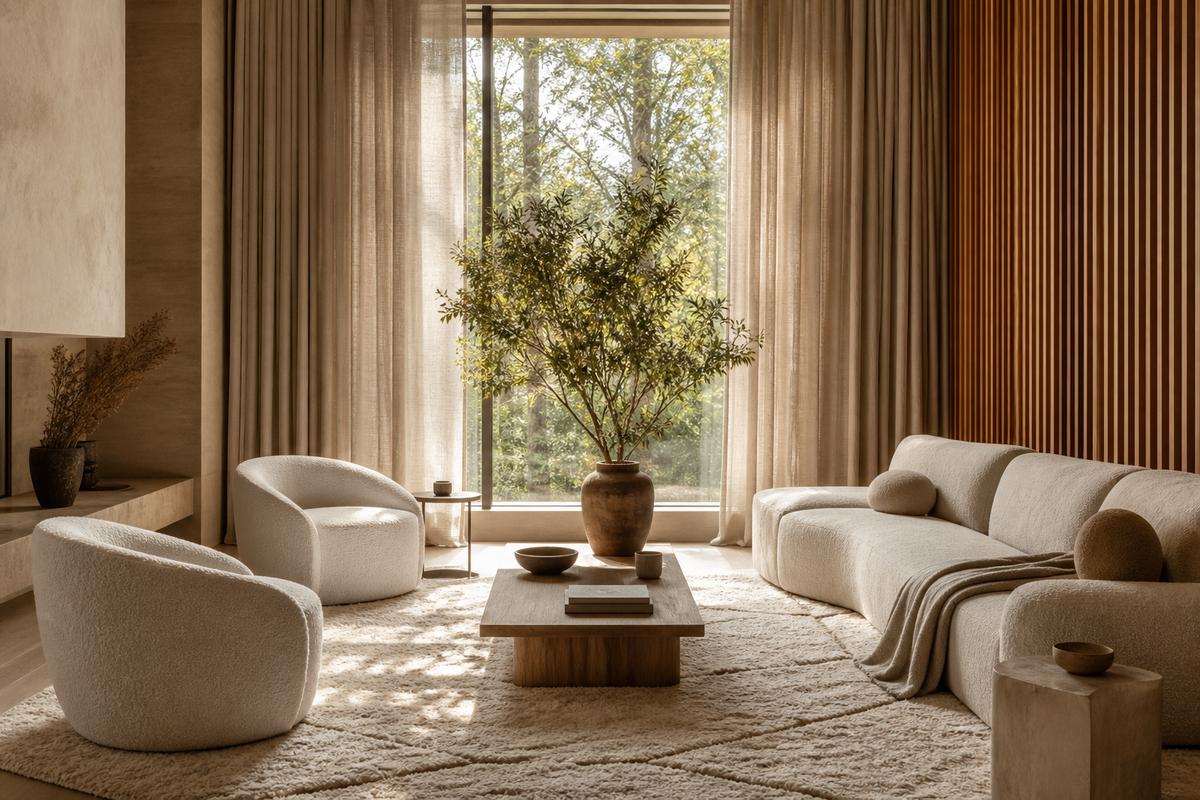
Open-plan homes often look calm in photographs but feel tiring in daily life because sound keeps bouncing between hard floors, glass, stone counters, and bare walls. The simplest thesis is also the most overlooked: acoustic textiles are becoming a practical interior-design upgrade because they improve how a home feels without adding screens, gadgets, or renovation-level complexity.
Why Sound Belongs in the Design Brief
Most people notice acoustics only after a room is finished. A kitchen island becomes a drum, a video call echoes through the dining area, and a child playing in one corner makes the whole living space feel busy. That is not a personality problem; it is a material problem. Smooth plaster, porcelain tile, large windows, and minimalist furniture all reflect sound. A beautiful room can therefore look warm while still behaving like a small lobby.
Designers are increasingly treating acoustic comfort as part of wellness, alongside daylight, ventilation, and natural materials. Recent design coverage points to acoustic panels, textured surfaces, and nature-based materials as 2026 priorities, especially in multipurpose homes where working, cooking, relaxing, and entertaining happen in adjacent zones.
Start With Soft Layers, Not Specialty Products
The most effective first step is not always a visible acoustic panel. It is often a layered textile plan. A dense wool rug under the seating area, lined curtains near large windows, upholstered dining chairs, and a fabric-covered bench can remove the sharpest reflections before the room needs anything more technical.
For example, a small apartment with timber floors and a glass balcony door may not need construction. A rug that extends beyond the sofa, full-height linen curtains with a lining, and one upholstered lounge chair can make speech feel closer and music less harsh. The room still reads as minimalist, but it stops amplifying every plate, key, and keyboard tap.
When Panels Make Sense
Acoustic panels are useful when textiles alone cannot solve a hard-surfaced room. The key is to integrate them as architecture, not as afterthoughts. Wood slat panels with felt backing can add rhythm to a media wall. Fabric-wrapped panels can sit behind a desk where calls happen. Cork, felt, and emerging bio-based boards can work in reading corners or play areas where sound control and tactile warmth both matter.
The tradeoff is visual weight. Too many panels can make a living room look like a studio or office. A better approach is to place treatment where sound first reflects: opposite a sofa, behind a work chair, near a dining nook, or beside a stair opening. One well-placed wall can outperform scattered decorative squares.
Choose Materials That Match the Room’s Mood
Acoustic comfort should not force a technical aesthetic. A warm neutral room might use bouclé, wool, oak slats, and heavy linen. A brighter modern space could use pale felt, cork, or ribbed panels painted near the wall color. A family room may benefit from washable performance fabrics, removable cushion covers, and darker rugs that hide daily wear.
There are maintenance tradeoffs. Thick curtains collect dust, high-pile rugs are harder to clean, and light fabric panels can show fingerprints. Homes with pets or allergies should favor flat-weave rugs, washable slipcovers, and panels that can be vacuumed. Acoustic design works best when it survives real life.
A Practical Checklist for Quieter Living Spaces
Begin with the loudest moment in the room: dinner, calls, television, children playing, or morning routines. Add one large soft surface near that activity before buying several small accessories. Cover at least part of the floor, soften the largest window, and avoid leaving two opposite hard walls completely bare. If the room still echoes, add one integrated panel zone rather than scattering products everywhere.
The goal is not silence. A home should still feel alive. The goal is shorter reverberation, clearer conversation, and less fatigue at the end of the day. Quiet fabrics work because they make comfort visible only through how the room behaves.
Key Takeaway
Acoustic textiles are a high-impact interior upgrade because they solve a sensory problem that minimal rooms often create: too much reflection. Start with rugs, curtains, upholstery, and one strategic panel zone, then let the room stay visually calm while becoming easier to live in.