Layered Window Treatments Make Daylight Easier to Live With
Layered window treatments are a practical interior upgrade because they let one room adjust glare, privacy, heat, and softness across the day without moving walls or buying new furniture.
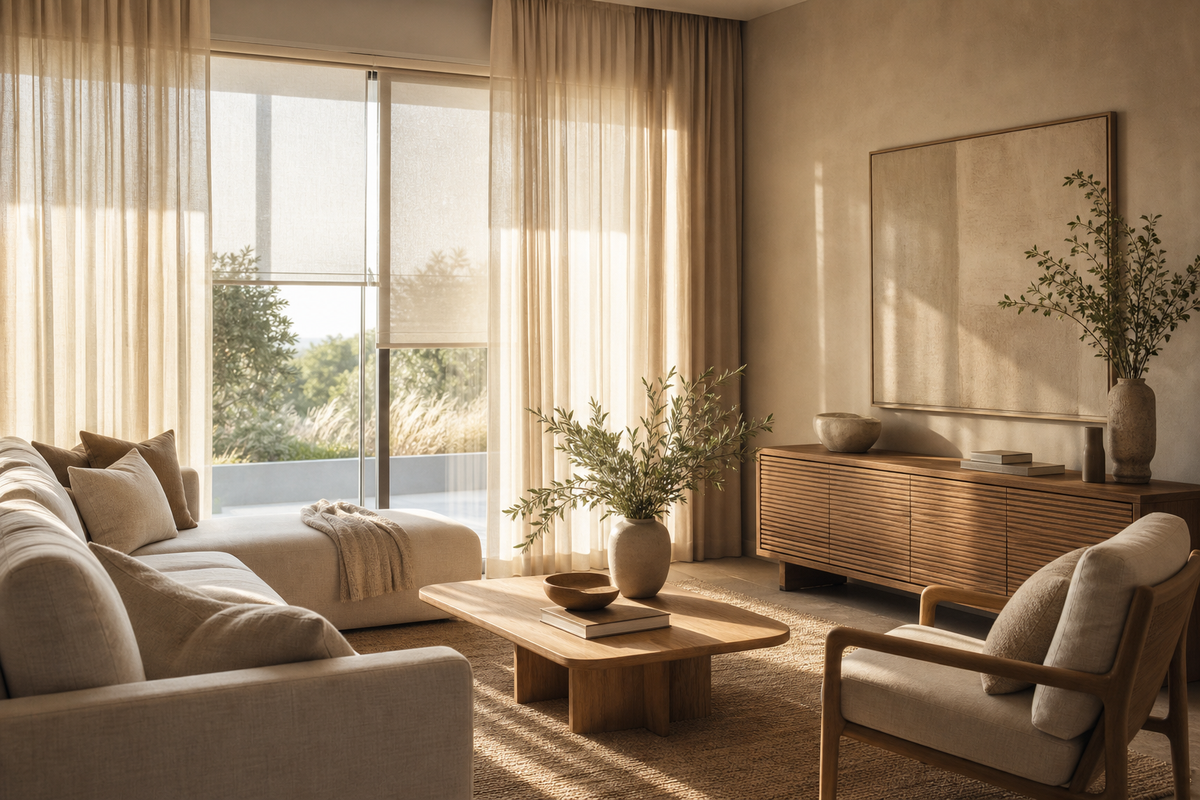
Layered window treatments are becoming one of the most useful interior upgrades because they solve several daily problems at once: glare on screens, overheated rooms, exposed evening windows, and flat-looking walls. The strongest 2026 window ideas are not just decorative curtains; they are small daylight systems that combine sheer fabric, solar control, and heavier privacy layers so a room can change mood and function without changing its layout.
Why windows deserve a system, not a single curtain
A single window covering usually forces a compromise. Blackout drapery can make a bedroom restful at night but heavy during the day. Bare solar shades reduce glare but can feel too office-like in a living room. Sheer curtains soften sunlight beautifully, yet they may not provide enough privacy after dark. Layering works because each layer has a distinct job.
For example, a west-facing living room might use a low-profile solar shade close to the glass, a linen sheer for daytime softness, and side panels for evening warmth. A small bedroom might pair a blackout roller shade with relaxed fabric curtains so sleep quality improves without making the room feel like a hotel. The design goal is not to add more fabric for its own sake. It is to give the room more settings.
Start with the light problem you actually have
The right combination depends on the window's behavior. East-facing rooms often need gentle morning diffusion rather than heavy protection. South-facing rooms may need UV and heat control for furniture, rugs, and artwork. West-facing rooms need the most help because late-day sun arrives low, bright, and hot. Street-facing rooms need privacy even when the lights are on inside.
Before buying anything, watch the room for two ordinary days. Note when the television reflects the window, when a desk becomes uncomfortable, when neighbors can see in, and when the room feels visually cold. That simple audit prevents the common mistake of choosing a pretty fabric that does not solve the actual problem.
A good layered setup can be modest
Layered does not have to mean formal, expensive, or fussy. In many homes, the cleanest version is a solar or cellular shade mounted inside the frame, with ceiling-height sheers or simple side panels mounted outside the frame. The shade handles glare and thermal control. The fabric adds scale, movement, and a softer edge to the architecture.
Small rooms benefit from mounting the curtain rod high and wide. This keeps the glass clear when panels are open and makes the wall feel taller. Neutral sheers can make a compact dining nook feel brighter without exposing it completely. Textured panels can add depth to a rental living room where changing flooring or built-ins is not realistic.
Tradeoffs: maintenance, cost, and visual weight
The main risk is over-layering. Too many dark panels can shrink a room, collect dust, and make windows hard to operate. Motorized shades can be convenient on tall or hard-to-reach windows, but they add cost and another maintenance point. Natural woven shades bring texture, but they may not block enough glare for a work-from-home desk. Linen looks relaxed and beautiful, but it can wrinkle and may need lining for privacy.
This is why the best choices are specific. Use tighter solar fabric where heat and glare are the problem. Use sheers where the room needs atmosphere. Use blackout or lined panels only where sleep, media viewing, or night privacy truly matters. A layered window should make daily habits easier, not create another fragile design feature.
Practical styling details that make it feel finished
Hardware matters more than people expect. Thin rods can look underpowered across wide windows, while bulky rods can fight minimalist rooms. Choose hardware that matches the room's other metal finishes or deliberately disappears. Keep hems consistent, especially when multiple windows share one wall. If the room has several window sizes, repeating the same fabric language helps the space feel calmer.
Color is another useful lever. White sheers are bright and airy, but warm ivory, oatmeal, or pale taupe can feel softer with wood floors and beige upholstery. In darker rooms, avoid heavy contrast unless the window is meant to be a focal point. In bright rooms, a slightly textured neutral fabric can reduce the clinical feeling of plain white walls.
Key Takeaway
Layered window treatments are a high-impact interior upgrade because they let a room manage daylight, privacy, heat, and softness throughout the day. Start by identifying the real light problem, then combine one functional layer with one atmospheric layer; the result should feel calmer, more flexible, and easier to live with, not simply more decorated.