Entryway Drop Zones Are Becoming the Calm Home Reset
The most useful entryway trend is not a bigger mudroom. It is a deliberate drop zone that absorbs keys, bags, shoes, mail, and pet gear before clutter reaches the rest of the home.
The Thesis: The Entryway Is a Reset System
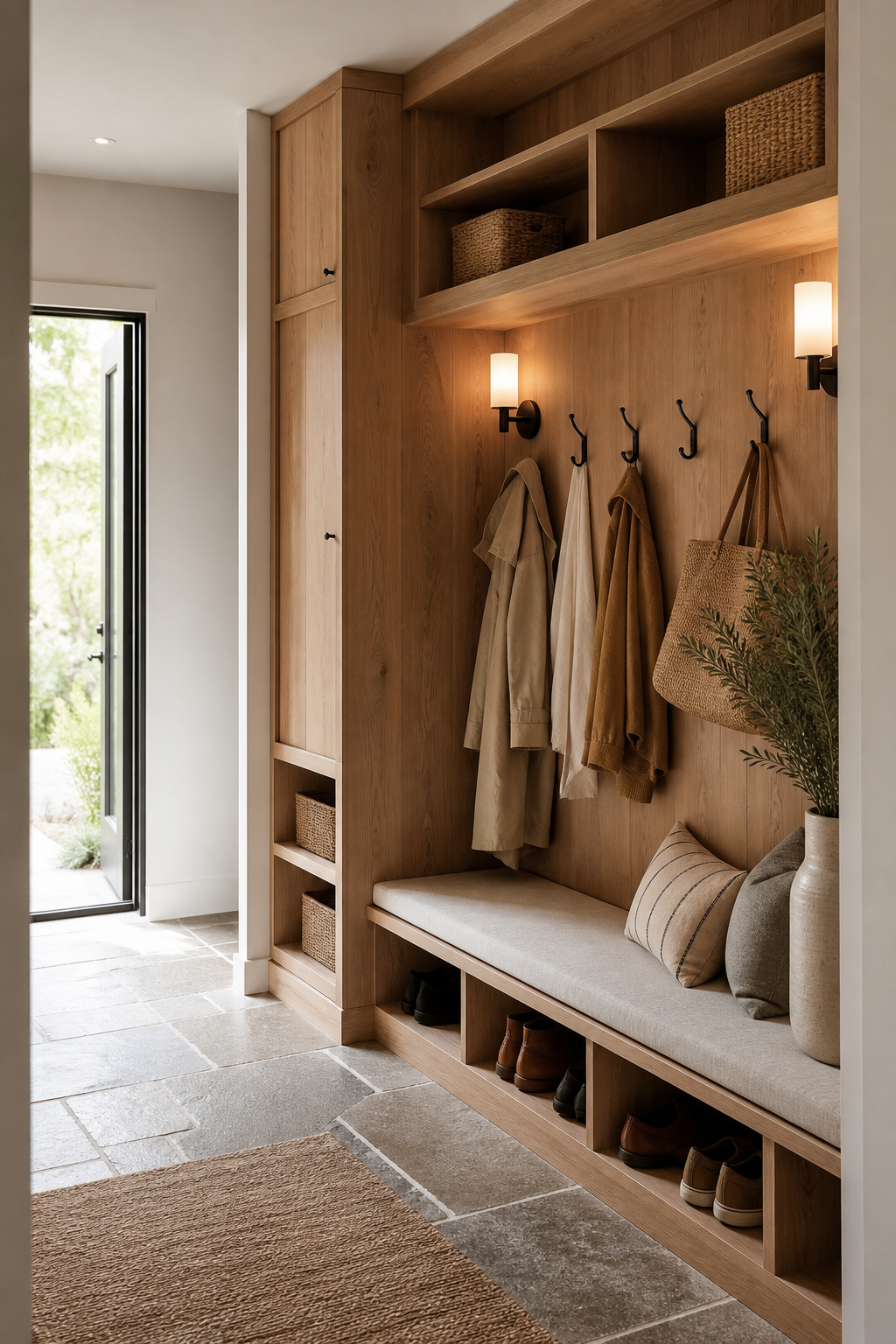
Entryway drop zones are becoming the calm home reset because they solve a daily problem before it travels through the house. Recent design coverage around mudrooms, entry storage, and hardworking transitional spaces points to the same shift: the first few feet inside the door now need to manage bags, shoes, mail, keys, coats, deliveries, pet leashes, and charging cables without looking like a service corridor. The thesis is simple: a well-designed entry does not merely welcome people in; it interrupts clutter at the moment it is created. That makes the drop zone one of the highest-impact interior updates for busy households, renters, and compact urban homes that cannot add a full mudroom. It also explains why this idea works across styles: a traditional foyer, a modern apartment hallway, and a side-door laundry entry all benefit from the same simple sequence of arrive, sort, store, and reset.
Start With the Items That Actually Arrive
A useful drop zone begins with an honest inventory, not a mood board. Track what lands near the door for three normal days. One household may need hooks for backpacks, a tray for sunglasses, a drawer for dog bags, and a charging shelf for earbuds. Another may need shoe storage, a package shelf, and a place for reusable grocery bags. Designing from real arrivals prevents the common mistake of building a beautiful bench that still leaves mail on the dining table. The best layouts separate quick-access items from occasional storage: keys and wallets stay visible, while winter gloves, extra umbrellas, and cleaning cloths can live behind doors.
Make Seating and Storage Work Together
The bench is the anchor, but it should not be treated as decoration. A slim seat gives people a place to remove shoes, set a tote for ten seconds, or help a child with a jacket. Under the bench, drawers are better for dust control, while open cubbies are faster for shoes that are used every day. Above it, hooks are more forgiving than hangers because they match how people behave when they are tired. The tradeoff is visual order: open hooks show clutter quickly. A practical compromise is to use a few handsome hooks for daily coats and hide overflow in a cabinet, closet, or woven basket.
Lighting Turns Utility Into a Room
Drop zones fail when they feel like leftover space. Lighting can change that without major construction. A warm wall sconce makes an entry feel intentional, helps guests see where to place belongings, and reduces the cave effect of a narrow hallway. If wiring is difficult, rechargeable picture lights or plug-in sconces can still create a point of focus. The goal is not dramatic brightness; it is a soft signal that this is a designed transition. Pair the light with a mirror, durable runner, or stone-look tile and the entry becomes a small room with a job, not just the place where everyone drops things.
Choose Finishes for Friction, Not Just Style
An entryway is a high-contact zone, so finishes should be selected for recovery. Painted cabinet fronts need to wipe clean. Handles should be easy to grab with one hand full. Floors should tolerate wet shoes and grit. Trays for mail and keys should be shallow enough that they cannot become junk drawers. The most elegant material choice is often the one that reduces hesitation: a washable runner instead of a delicate rug, a matte cabinet instead of a fingerprint-prone gloss, or a darker stone threshold where umbrellas drip. Style matters, but the real luxury is a reset routine that takes less than two minutes.
Key Takeaway
The strongest entryway drop zones combine a bench, quick-access storage, hidden overflow, warm lighting, and durable surfaces around the actual things people bring home. When the first five minutes are designed well, the rest of the home stays calmer with less effort.