Energy Monitoring Makes Automation Worth Acting On
Energy monitoring becomes useful when it triggers specific household actions: shifting loads, finding standby waste, and coordinating HVAC or lighting around occupancy. The goal is fewer surprises on the bill, not another app to stare at.
The Thesis: Measurement Only Matters When It Changes Behavior
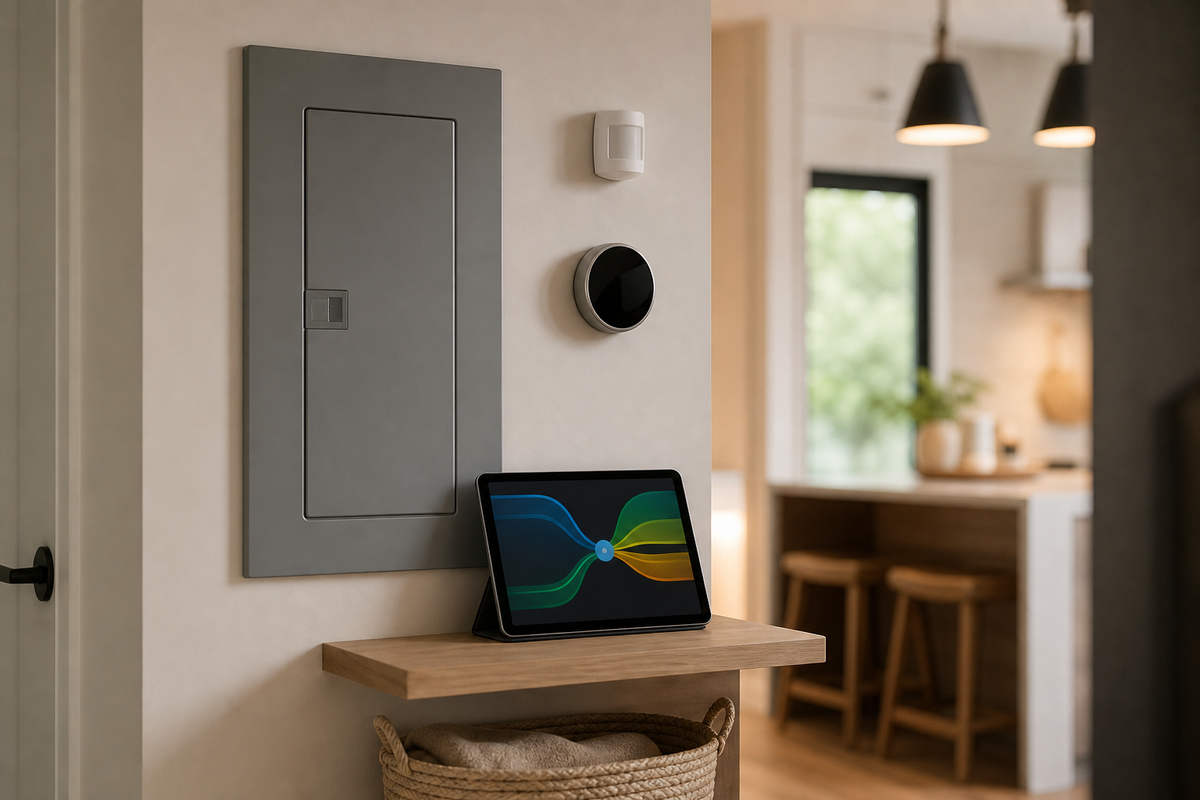
Energy monitoring is becoming the most practical smart home upgrade because it connects invisible household habits to decisions people can actually make. A dashboard that merely reports watts is easy to ignore after the first week. A useful system explains which loads are expensive, when they run, and what routine should change next. The thesis is simple: energy monitoring pays off when it becomes a trigger for small automations and better timing, not when it becomes another screen full of charts.
Start With the Loads That Have Real Consequences
The best first targets are not tiny chargers or occasional lamps. They are appliances and systems that run for long periods: HVAC equipment, water heaters, laundry machines, dishwashers, dehumidifiers, pool pumps, EV charging, and always-on entertainment or networking gear. Circuit-level monitors can show whether a heat pump is cycling too often, whether a dryer is being used during expensive evening rates, or whether a second refrigerator in the garage is quietly costing more than expected. Plug-level meters are still useful for renters or smaller experiments, especially for finding standby waste in media cabinets, desk setups, and older appliances. This prioritization matters because a household may only have patience for two or three changes at a time. Saving five percent on a major recurring load is usually more meaningful than obsessing over a device that costs pennies per month.
Turn Data Into Local Routines, Not Nagging Alerts
A common mistake is sending every spike to a phone. That creates alarm fatigue without saving energy. Better routines are boring and specific. If the laundry room monitor sees the dryer finish, send one reminder so clothes do not sit and require another cycle. If occupancy sensors show the home office is empty for 20 minutes, reduce task lighting and nudge the thermostat by a degree. If solar production is high at midday, schedule the dishwasher or battery charging window then. If total demand approaches a costly peak period, pause nonessential loads instead of asking someone to interpret a graph in real time.
The Tradeoffs: Accuracy, Privacy, and Installation Effort
Whole-home monitoring is powerful, but it is not magic. Some systems infer appliance signatures from the main panel, which can mislabel devices with similar patterns. Circuit clamps provide clearer data, yet installation may require an electrician and a panel with enough physical space. Plug meters are cheap and simple, but they miss hardwired equipment. Privacy also deserves attention because energy data can reveal daily routines: when people wake, cook, leave, or sleep. Prefer systems with clear retention settings, local export options, and automations that can run inside the home for routine decisions. The goal is insight with restraint, not permanent surveillance of every habit.
A Practical Setup for the Next 30 Days
A household can make progress without redesigning everything. Week one: measure the largest loads and label them clearly. Week two: compare usage against time-of-use pricing or solar production, then move one flexible task such as laundry, dishwashing, or EV charging. Week three: add one occupancy-based routine for lighting or HVAC setbacks in a room that is often empty. Week four: review only the changes that affected comfort or cost, then delete noisy alerts. This keeps the system focused on decisions instead of novelty. The best result is a home that quietly avoids waste while staying comfortable. If the numbers do not change behavior, simplify the setup until the next step is obvious to everyone in the household.
Key Takeaway
Energy monitoring is valuable when it turns invisible consumption into precise, low-friction action. Measure the major loads, automate only the routines with clear payoffs, protect household privacy, and keep alerts rare. A calmer energy system is not the one with the most charts; it is the one that helps the home waste less power without demanding constant attention.