The Compact Kitchen Is Becoming a Work-Zone System
The strongest compact kitchens in 2026 are not miniature showrooms. They are work-zone systems that hide visual noise, keep daily tools close, and make cooking, coffee, cleanup, and storage easier to repeat.
The Thesis: Small Kitchens Need Systems, Not More Style Objects
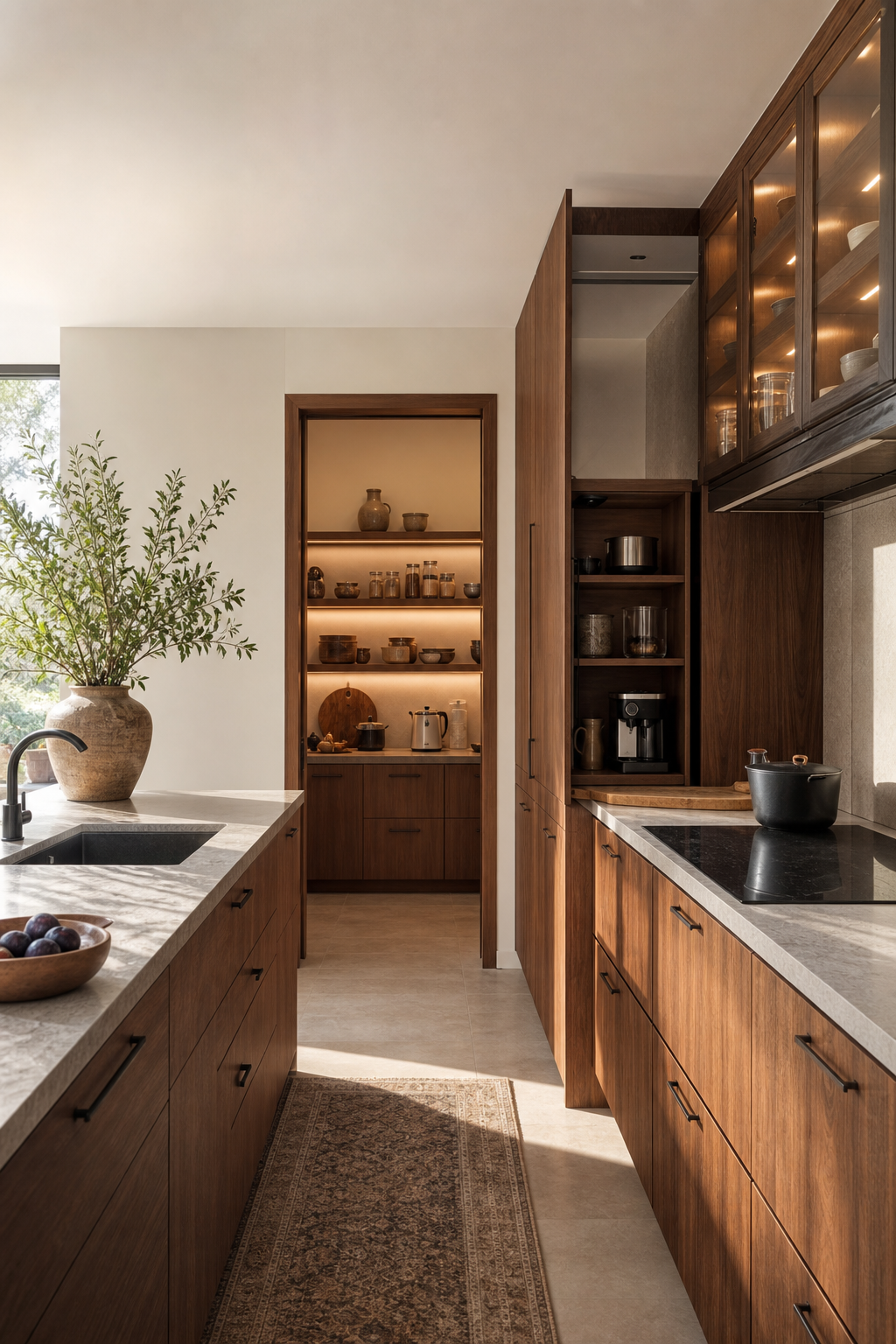
The compact kitchen is becoming a work-zone system because the best new design ideas are less about spectacle and more about repeatable daily motion. Recent 2026 kitchen coverage points toward concealed storage, camera-ready surfaces, appliance garages, pantry functions in smaller footprints, and more intentional cabinet planning. The thesis is straightforward: in a smaller home, a kitchen feels luxurious when every common task has a clear place to start, finish, and disappear. A beautiful faucet or stone slab helps, but the real upgrade is reducing the number of times a cook has to move, search, clear, and reset. That makes planning more important than decoration, especially for apartments, townhomes, and renovated older houses where the room cannot simply expand.
Build Around Daily Sequences
A useful compact kitchen begins with the routines that happen every day. Coffee needs beans, mugs, filters, spoons, a machine, and a nearby bin for spent grounds. Breakfast needs bowls, cereal or oats, fruit, a cutting surface, and quick access to the dishwasher. Weeknight cooking needs oils, spices, knives, pans, and a landing zone for hot trays. Instead of scattering these items wherever a cabinet happens to be empty, group each sequence into a zone. The coffee zone can live behind pocket doors. The prep zone can claim the widest counter run. The cleanup zone should keep detergent, towels, recycling, and food storage containers within one step of the sink.
Conceal Visual Noise Without Hiding Everything
The appeal of concealed kitchens is easy to understand: small rooms become stressful when every tool is visible at once. But total concealment can also slow people down. The better tradeoff is selective visibility. Keep attractive, frequently used items within reach, such as a cutting board, fruit bowl, or two everyday mugs. Hide the toaster, blender, charging cables, pet bowls, and backup groceries behind doors that are easy to open. Glass-front cabinets or fine mesh panels can lighten a wall while still controlling clutter. The goal is not a sterile showroom; it is a kitchen that can move from breakfast mess to calm evening room in five minutes.
Use Pantry Thinking in Any Footprint
A separate butler pantry is not required to borrow pantry thinking. Even a narrow cabinet can become a mini operations hub if it has pullout shelves, labeled bins, a tray for baking supplies, and a dedicated shelf for overflow drinks or snacks. Renters can create the same effect with a freestanding cabinet or a rolling cart tucked beside the refrigerator. The practical test is simple: can someone unload groceries without turning the counter into a staging warehouse? If the answer is no, the kitchen needs a receiving zone. That may be a shallow cabinet for unopened packages, a drawer for wraps and bags, or one shelf reserved for ingredients used this week.
Materials Should Support Maintenance
Compact kitchens work harder, so finishes need to be chosen for upkeep as much as mood. Honed stone, durable composite counters, washable paint, wipeable cabinet fronts, and resilient flooring can matter more than a dramatic material that shows every fingerprint. Warm wood tones and soft neutrals remain useful because they make storage-heavy walls feel less mechanical, but they should be paired with hardware that is comfortable to grab and corners that are easy to clean. The hidden cost of a tiny kitchen is friction. If a surface makes people hesitate before chopping, serving, or wiping, it will not survive real use.
Key Takeaway
The compact kitchen of 2026 is not trying to imitate a large trophy kitchen at a smaller scale. Its strongest idea is operational design: create zones for prep, coffee, pantry, cleanup, and reset, then use concealment and durable finishes to keep the room calm. When every routine has a home, a small kitchen can feel more generous than a larger one that forces people to improvise every day.