Smart Rings Work Best as Recovery Sensors, Not Tiny Watches
Smart rings are most useful when they stop trying to replace the smartwatch. Their real value is quiet recovery tracking: sleep, readiness, temperature trends, battery life, and fewer screens.
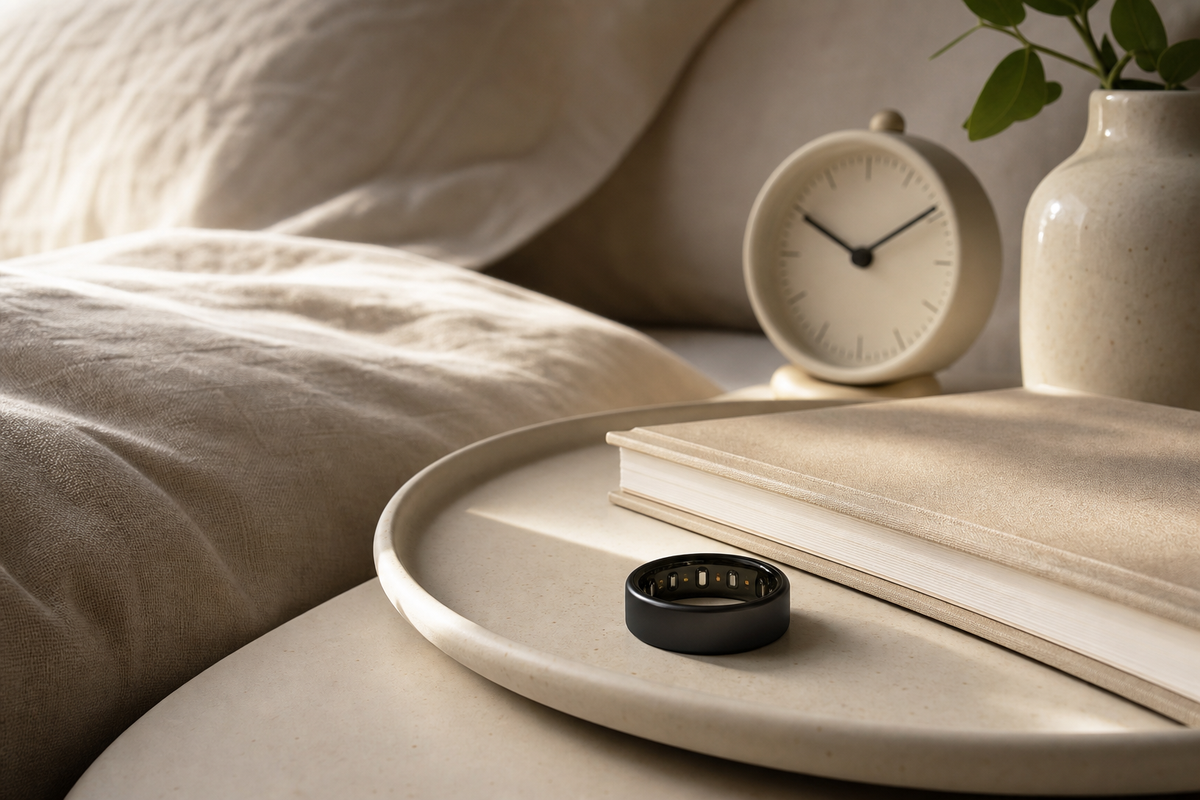
The Thesis: The Ring Should Be Quiet
Smart rings are becoming a serious wearable category, but their best role is not to become a miniature smartwatch. The useful thesis is narrower: a ring works best as a quiet recovery sensor that collects sleep, temperature, heart-rate, and activity patterns with almost no daily interaction. That makes it valuable for people who want better health signals without another glowing screen, another notification surface, or another device that has to be charged every night.
Why the Form Factor Changes the Job
A ring sits on the body differently from a watch. It is easier to wear while sleeping, less likely to interfere with typing, and usually more comfortable under sleeves or during travel. It also has obvious limits: there is no large display, no comfortable keyboard, and no good way to make it a command center. Those constraints are a feature. Instead of competing for attention, the ring can focus on background measurement. For many users, that means better consistency: the device stays on during the exact hours when recovery data matters most. This is especially useful for people who already carry a phone and may own a smartwatch, because the ring does not need to duplicate every function. It can be the calmer layer that watches the body while other devices handle communication.
The Signals That Actually Matter
The practical value is not a single readiness score. It is the pattern behind the score. A rising resting heart rate after late meals, a temperature shift before illness, a week of shorter deep-sleep windows, or a lower recovery baseline after heavy travel can all help someone adjust routines before burnout becomes obvious. A consultant may use the data to avoid scheduling intense calls after a red-eye flight. A runner may notice that alcohol affects sleep more than workout load. A founder may learn that midnight laptop sessions are less productive than they feel because the next morning starts below baseline.
Tradeoffs Buyers Should Notice
The biggest tradeoff is subscription value. Some rings are affordable up front but reserve the most useful insights for a paid plan; others cost more but make basic trends easier to keep. Sizing is another practical issue, because a ring that fits in winter may feel tight during heat, exercise, or long flights. Battery life matters too. A wearable that lasts several days feels like a health tool; a wearable that demands constant charging becomes a chore. Charging rhythm also affects data quality: if the ring is always on the charger at bedtime, the most important sleep signal disappears. Finally, privacy deserves attention. Health data is intimate, so buyers should check export options, account deletion policies, cloud requirements, and whether raw trends can be reviewed without sharing them with every connected app.
A Better Everyday Workflow
The strongest setup is simple. Wear the ring overnight and during normal days, but keep the watch or phone responsible for maps, calls, payments, and urgent alerts. Review trends once in the morning or at the end of the week rather than refreshing scores throughout the day. Use the ring to trigger small decisions: earlier bedtime after two poor nights, a lighter workout when recovery is low, a walk after a sedentary travel day, or a stricter caffeine cutoff when sleep latency climbs. The point is not to obey the device. The point is to turn invisible fatigue into visible context.
Key Takeaway
Smart rings are compelling because they are limited. When treated as quiet recovery sensors instead of tiny watches, they can make health tracking calmer, more consistent, and more actionable. The best purchase decision is not the ring with the loudest feature list, but the one that disappears into daily life while still helping you protect sleep, energy, and attention.