Low-Sheen Finishes Make Calm Rooms Easier to Live In
Low-sheen finishes are a practical design tool: they soften glare, hide daily wear, and make modern rooms feel calmer without removing character.
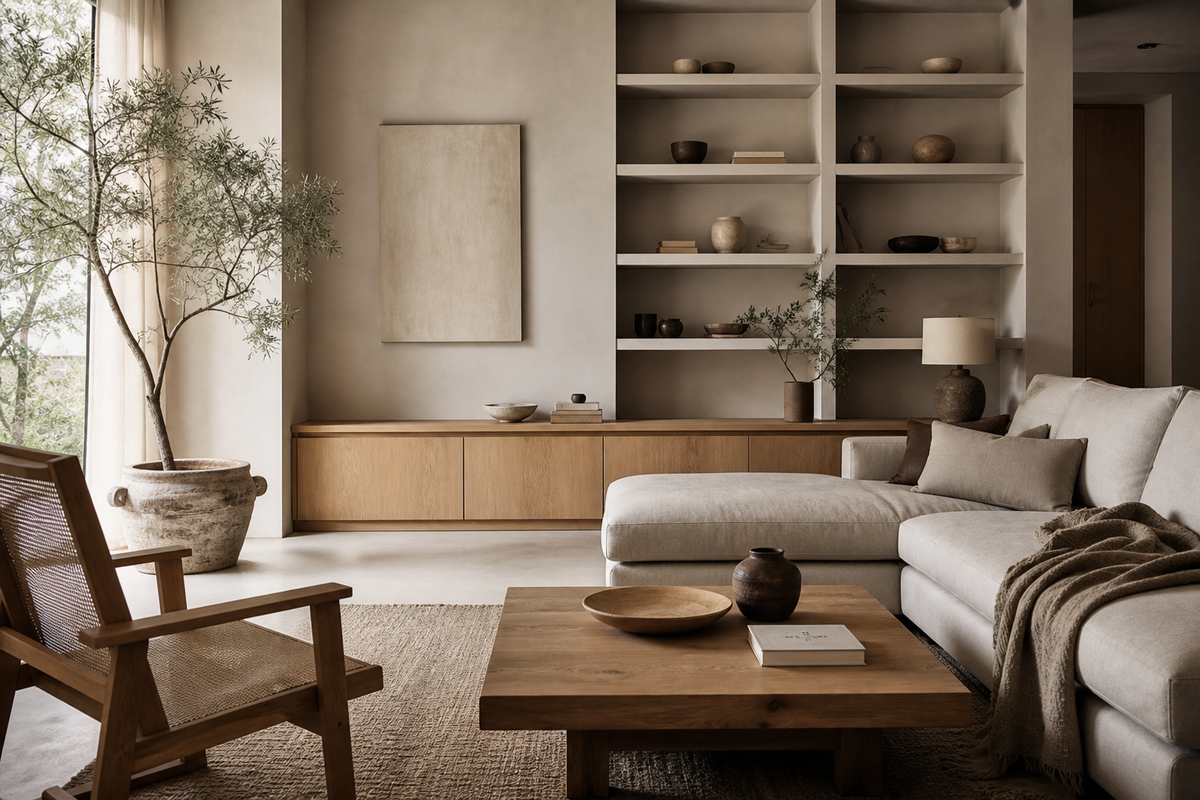
Low-sheen finishes are becoming a useful antidote to rooms that look polished online but feel harsh in daily life. The thesis is simple: matte paint, honed stone, low-gloss cabinetry, and softly textured plaster can make a home calmer because they reduce glare, disguise small marks, and let shape, light, and material do the visual work instead of shine.
Why shine changes the mood of a room
Gloss is not automatically bad. A lacquered cabinet, polished tile, or reflective accent table can add depth and drama. The problem starts when too many surfaces bounce light at once. In a living room with large windows, a glossy media wall can create distracting reflections. In a kitchen, shiny cabinet fronts may show fingerprints before dinner is finished. In a bedroom, bright reflections can make a space feel more like a showroom than a place to rest.
Low-sheen materials change that rhythm. They absorb and scatter light more gently, so edges look softer and colors appear deeper. A warm white wall in a flat or matte finish feels different from the same color in satin. A honed marble counter reads as stone rather than mirror. The room still has depth, but it is quieter and easier on the eye.
Use matte surfaces where people touch and pause
The most useful places for low-sheen finishes are the areas people see and touch every day. Built-in shelves, cabinet doors, media units, headboards, and dining nooks benefit from a finish that does not announce every fingerprint. Matte painted millwork can make storage feel more architectural and less bulky. A low-glare dining wall lets art, chairs, and tableware stand out without competing with reflections.
There are practical limits. Very flat paint can be harder to clean in busy hallways or children’s rooms, so a washable matte or low-sheen eggshell may be smarter than the flattest possible finish. In kitchens, cabinet materials should be tested for smudges, cleaning products, and edge wear. The goal is not purity; it is choosing the lowest sheen that still survives the room’s real use.
Texture keeps quiet rooms from feeling plain
A common fear is that matte rooms will look dull. Texture solves that problem. Limewash, clay paint, microcement, woven rugs, linen upholstery, ribbed wood, and brushed metal all add variation without a glossy surface. The effect is especially strong in neutral rooms, where texture prevents beige, cream, gray, or brown from feeling empty.
For example, a small apartment living area can combine matte warm-white walls, an oak media shelf, a wool rug, and linen curtains. None of those elements need high shine to create interest. The contrast comes from grain, weave, shadow, and proportion. In a darker room, a low-sheen olive or cocoa wall can feel enveloping rather than heavy when paired with warm lamps and lighter fabric.
Balance matte with controlled highlights
A room does not need to be completely matte. In fact, a few controlled highlights make low-sheen design work better. A ceramic lamp base, a brass picture light, glassware on open shelving, or a slightly polished stone tray can catch light in small doses. The difference is that these highlights become accents instead of the dominant mood.
This balance matters in modern homes, where open plans often connect kitchens, dining spaces, and lounges. If every cabinet, counter, and table reflects light, the whole room can feel busy even when it is tidy. If the background surfaces are quieter, a glossy backsplash or metal pendant can feel intentional rather than loud.
How to test before committing
Before repainting a full room or ordering custom cabinetry, test finishes in the actual space. Paint large sample boards and view them in morning, afternoon, and evening light. Put cabinet samples near windows and touch them with clean and slightly oily hands. Compare matte, eggshell, satin, honed, brushed, and polished options side by side. The best finish is usually the one that looks calm in bad light, not only beautiful in perfect daylight.
Also consider maintenance. A low-sheen wall behind a sofa may stay pristine for years, while a matte surface near a trash drawer may need frequent cleaning. Use quieter finishes where they improve comfort and choose more durable finishes where daily friction is unavoidable.
Key Takeaway
Low-sheen finishes are not just a style trend; they are a way to make rooms feel more livable. Use them on large background surfaces, add texture for depth, keep a few controlled highlights, and test samples under real light before committing.