Automated Shades Make Sunny Rooms Easier to Manage
Automated shades are useful when they are treated as a comfort routine: manage glare, heat, privacy, and daily rhythm before anyone reaches for an app.
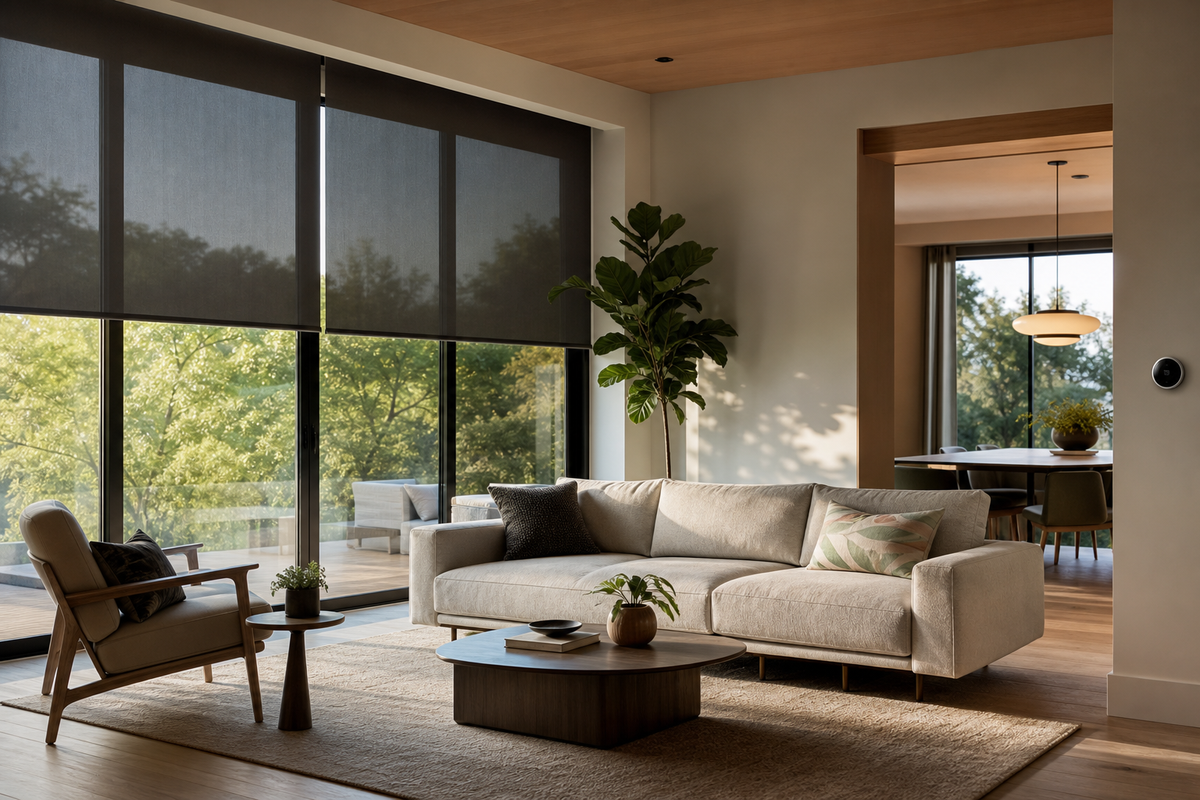
Automated shades are becoming one of the most practical smart home upgrades because they solve a problem people feel every day: rooms that are too bright, too hot, or too exposed at the wrong time. The thesis is straightforward: motorized blinds and curtains work best when they are programmed as quiet comfort infrastructure, not as another novelty device that demands constant app attention.
Why shade automation is different from gadget automation
Many smart home products promise convenience but add a new screen, account, or maintenance task. Shades are different because the action is physical and immediate. When a west-facing living room gets harsh in the afternoon, lowering the shade changes the room within seconds. When a bedroom faces the street, closing curtains at dusk improves privacy without anyone remembering a routine.
That makes automated window coverings especially useful in homes where sunlight is both an asset and a problem. A bright kitchen may be pleasant at breakfast but uncomfortable during late-day prep. A home office may need natural light in the morning and glare control during video calls. The value is not that a blind can be moved by a phone; it is that the room can respond before the light becomes annoying.
Build routines around the window, not the app
The best setup starts with the window's behavior. South- and west-facing rooms usually need different schedules from north-facing rooms. A living room with a large glass door might need a partial close during the hottest part of the afternoon, while a bedroom may only need privacy after sunset. A nursery, media room, or desk area may need more precise scenes.
A simple routine can be more useful than a complicated one. For example, open bedroom shades gradually after the alarm, lower office shades to 40 percent during the brightest two hours, and close street-facing curtains at dusk. If the system supports light or temperature triggers, use them sparingly. A shade that moves every few minutes feels fussy; a shade that makes two or three reliable adjustments feels intelligent.
Comfort gains, payback, and realistic expectations
Automated shades can reduce solar heat gain in sunny rooms and may help lower cooling demand, especially when paired with insulating cellular shades or lined curtains. But the payback depends heavily on climate, window size, glass quality, shade fabric, and whether the household already uses air conditioning aggressively. A small north-facing window will not deliver the same benefit as a large west-facing wall of glass.
The more dependable return is comfort. Fewer overheated rooms, fewer squinting laptop sessions, and less fading on rugs or wood floors are tangible improvements even when the utility bill change is modest. The tradeoff is cost: motorized treatments, batteries, wiring, and custom sizing can become expensive quickly. Renters or budget-conscious owners should start with one problem window before automating an entire house.
Privacy without making the home feel closed
Privacy routines are where automated shades often feel surprisingly humane. Many homes leave blinds closed all day because opening and closing them is easy to forget. Automation lets rooms stay bright when privacy is not needed and protected when it is. A street-facing living room can keep sheer coverage during the day and close fully in the evening. A bathroom or bedroom can use a fixed privacy scene instead of relying on memory.
There is also a design benefit. If the shades move predictably, the room can be styled with lighter fabrics, layered curtains, or a mix of sheers and blackout panels without turning daily use into a chore. The smart home layer should preserve the look of the room, not dominate it.
Battery, noise, and control tradeoffs
The main practical issues are power, noise, and control placement. Battery-powered shades are easier to retrofit but need charging or battery replacement. Hardwired shades are cleaner for daily use but are usually best planned during renovation. Motor noise matters in bedrooms and offices; a quiet motor is worth paying attention to before buying.
Controls should also be redundant. Wall buttons or remotes are important because guests, children, and sleepy adults should not need an app to manage sunlight. Voice control can be useful, but the daily schedule should carry most of the workload. The best automated shade is one you rarely think about.
Key Takeaway
Automated shades are most valuable when they make sunlight, heat, and privacy predictable. Start with one sun-exposed or street-facing room, create a few calm routines, keep manual controls available, and let the automation improve comfort without becoming the center of attention.