Appliance Garages Make Small Kitchens Feel Calmer
Concealed countertop stations are useful because they reduce visual clutter while keeping everyday kitchen tools close enough to use.
The Thesis: Calm Counters Need Designed Hiding Places
Appliance garages are returning because small kitchens need fewer visible objects, not fewer useful tools. The thesis is simple: a concealed countertop station works when it protects the daily rhythm of cooking, coffee, and cleanup while giving the eye a quieter room at the end of the day. It is not a nostalgic cabinet trick. It is a practical response to apartments, open-plan living, and the growing number of devices that compete for a few feet of counter space.
Why This Is More Than a Door on a Cabinet
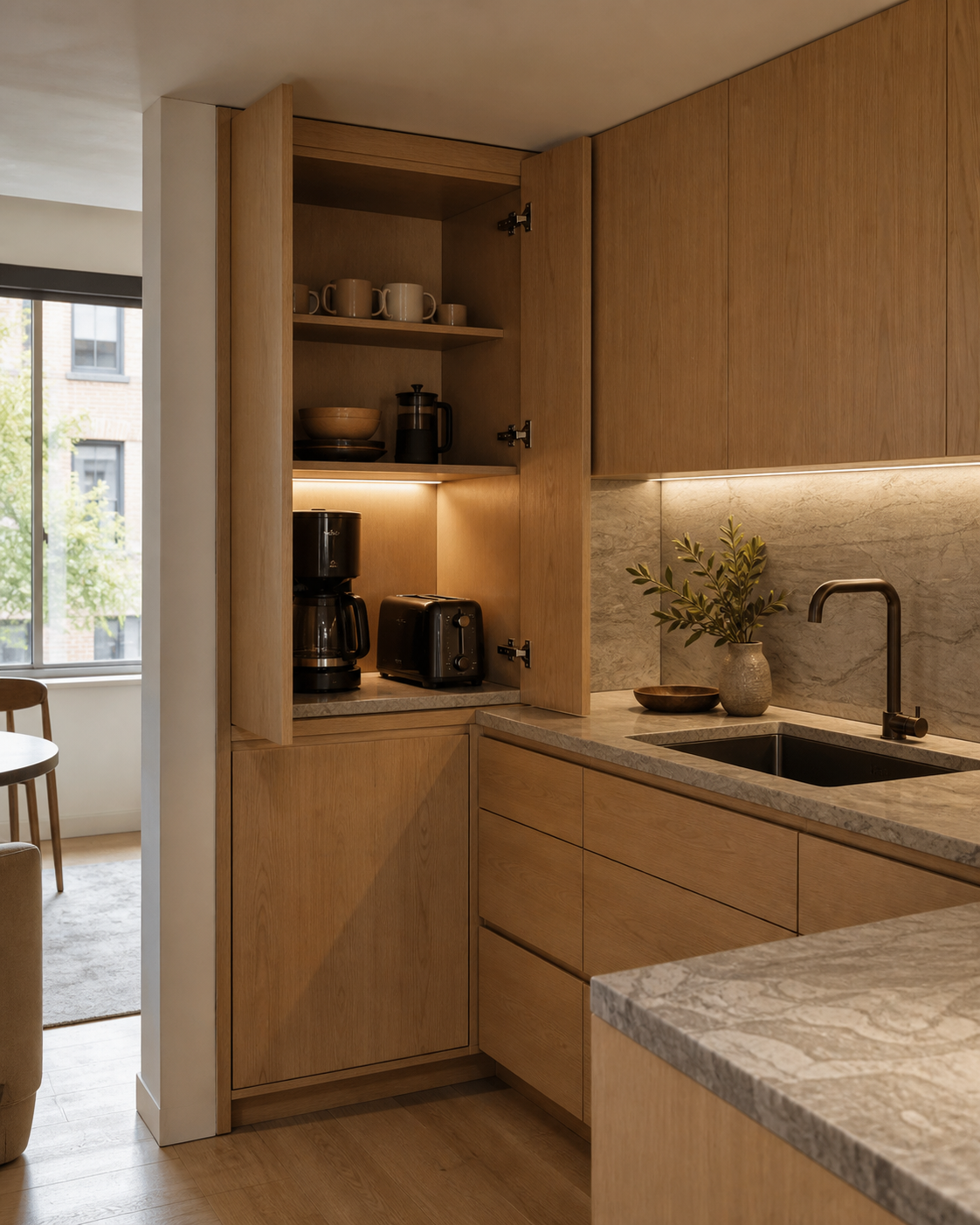
A useful appliance garage starts with a specific routine. One household may need a coffee station with mugs, beans, filters, and a grinder. Another may need a breakfast shelf for a toaster, blender, vitamins, and lunch containers. The storage only feels premium when every object has a reason to be there. A roll-up, pocket, or lift door hides the station when guests arrive, but the real design work is inside: shelf height, outlet placement, heat clearance, task lighting, and a counter surface that can handle crumbs and spills. Without those details, the cabinet becomes a dark cave where appliances go to be forgotten.
The Small-Space Advantage
In a small kitchen, visual clutter makes the whole home feel busier because the kitchen is often visible from the sofa, dining table, or entry. Concealed stations let people keep the microwave, kettle, mixer, or coffee setup close without turning the room into a display of cords and plastic. They also reduce the daily reset time. Instead of carrying a toaster from a high shelf or leaving a blender base permanently on the counter, the user opens one door, works in place, wipes the surface, and closes the scene. That sequence matters in rentals and compact homes where there is no separate pantry or scullery to absorb mess. It also helps shared households: one person can make coffee early, another can pack lunch later, and the kitchen still returns to a composed background for work calls or evening meals.
Tradeoffs: Access, Heat, and Honest Habits
The tradeoff is that hidden storage can become inconvenient if it is designed around fantasy behavior. A heavy stand mixer should not live behind a narrow door if someone bakes every weekend. A toaster needs ventilation and a surface that tolerates heat. A coffee machine may need space above it for water refills. Doors should not block a walkway or collide with upper cabinets. The best version is honest about frequency: daily tools stay at hand inside the station, weekly tools sit in deeper drawers below, and rarely used items move elsewhere. Good hardware is worth paying for because a sticky lift door quickly turns a calm feature into another annoyance.
How to Make It Look Intentional
The visual finish should match the kitchen rather than shout for attention. In warm minimalist rooms, a wood-front appliance garage can disappear into surrounding cabinetry while under-shelf lighting makes the inside pleasant to use. In a colorful kitchen, the hidden station might use the same paint as the upper cabinets but reveal a durable stone or stainless surface inside. For renters, the same idea can be approximated with a countertop hutch, a shallow pantry cabinet, or a freestanding coffee armoire. The principle is consistent: group related tools, provide power safely, leave enough working depth, and make the closed view calmer than the open view. Small labels inside drawers or trays can help the system survive busy weeks without making the outside look managed.
Key Takeaway
Appliance garages are valuable when they are designed around real routines, not just tidy photos. Use them to hide everyday visual noise while keeping coffee, breakfast, prep, or cleanup tools ready in one well-lit, ventilated place. The goal is not an empty kitchen; it is a kitchen that can work hard and then visually rest.