Tactile Materials Are the Small-Space Upgrade That Feels Expensive
Small rooms do not need more objects to feel complete. In 2026, tactile materials such as limewash, travertine, reclaimed wood, wool, cork, and textured tile offer a quieter way to add depth without visual clutter.
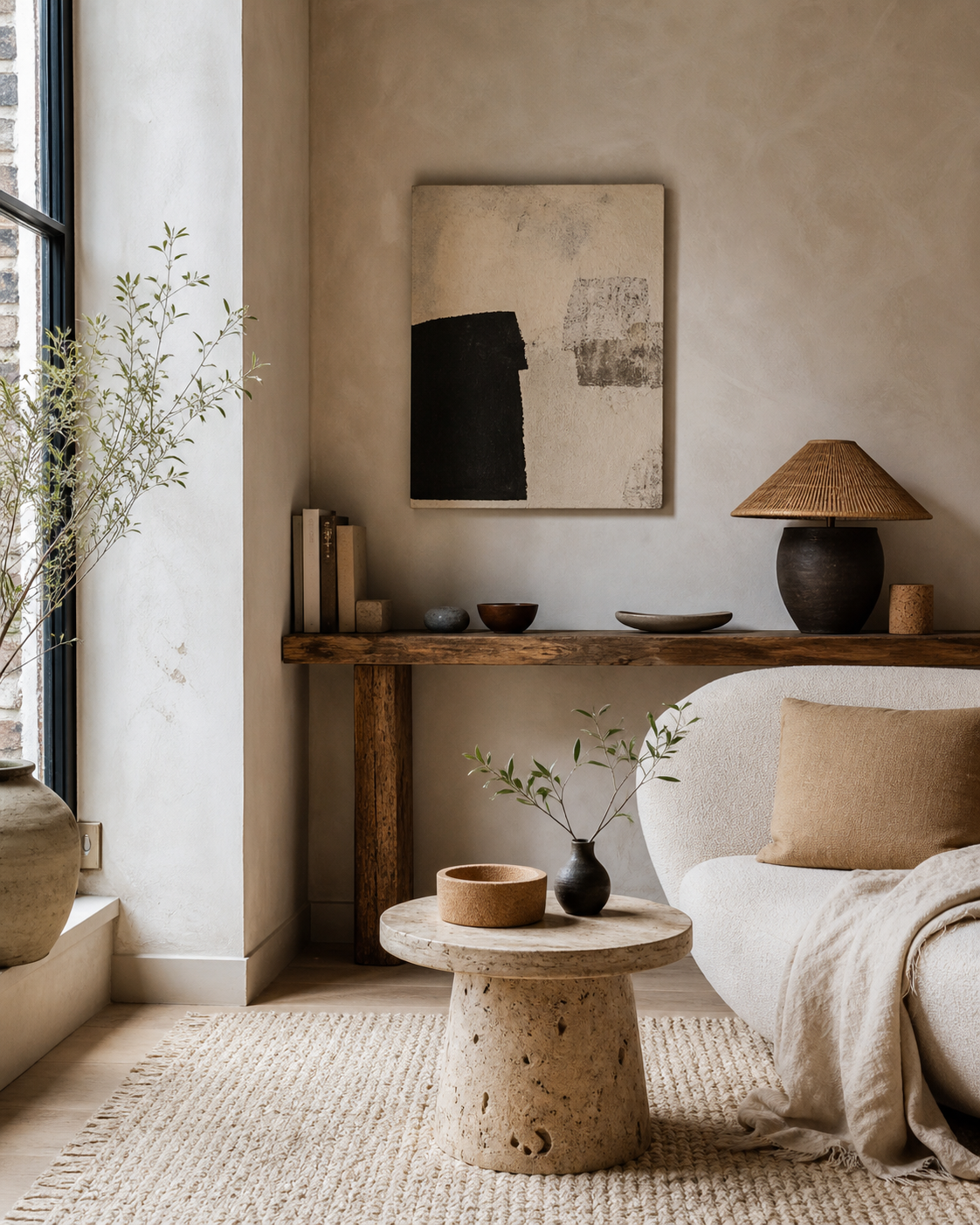
The Thesis: Texture Adds Depth Without Adding Clutter
The most useful small-space design upgrade in 2026 is not another storage basket, statement lamp, or smart gadget. It is a better material palette. As interior coverage keeps pointing toward earthy colors, sustainable surfaces, and expressive natural textures, compact homes have an opportunity to feel more finished without becoming crowded. Tactile materials such as limewash, travertine, reclaimed wood, cork, wool, clay tile, and softly grained veneers create visual depth at the surface level. That matters in a small room because every added object competes for floor area, while a more intentional wall, shelf, floor, or tabletop can make the same footprint feel warmer and more expensive.
Why Smooth Minimalism Now Feels Unfinished
For years, small apartments were often treated as white boxes: smooth walls, pale cabinets, thin metal legs, and a few black accents. The formula looked clean in photos, but it could feel flat in daily life. A compact room needs contrast at close range because people experience it from only a few steps away. If the sofa, wall, cabinet, and floor all have the same smooth finish, the eye reads the space as cheap even when the furniture is new. Texture solves that problem quietly. A limewash wall catches daylight differently through the afternoon. A wool rug softens sound and makes a desk corner feel less temporary. A stone tray or travertine side table gives a rental living room a permanent anchor without requiring built-in construction.
Use One Hero Surface, Not Five Competing Finishes
The practical rule is to choose one hero surface and let the rest of the room support it. In a studio apartment, that might be a textured wall behind the bed, a reclaimed wood dining ledge, or handmade-look tile around a small kitchen backsplash. In a narrow living room, it might be a cork pinboard wall that doubles as both material warmth and useful organization. The tradeoff is restraint. Too many tactile finishes can make a small home feel like a showroom sample board. Pair rough with smooth: limewash walls with plain linen curtains, travertine with simple white storage, a visible wood grain with matte cabinet fronts. The goal is not rustic overload. It is one memorable surface that gives the room a point of view.
Sustainable Materials Work Best When They Have a Job
Sustainability becomes more convincing when the material also solves a practical problem. Cork is renewable, but it is also lightweight, pin-friendly, and warm to the touch, making it useful near a desk or entryway. Reclaimed wood reduces demand for new timber, but it also hides small dents better than glossy veneer. Wool costs more than many synthetic rugs, yet it wears well and gives a living area acoustic softness. Even stone should be used thoughtfully. A full slab may be expensive and heavy, while a small travertine shelf, tile threshold, or side table can deliver the same visual language at a lower cost. The best upgrade is the one that looks intentional and survives ordinary use.
A Simple Room-by-Room Approach
Start with the place your hand touches most often. In an entry, that could mean a wood rail, cork wall hook panel, or ceramic catchall that makes keys and bags feel organized. In a work corner, add a textured pinboard, woven shade, or matte desk surface instead of more decorative objects. In the bedroom, one limewash or clay-toned wall can make basic bedding feel deliberate. In the kitchen, a small backsplash or open shelf in a tactile material can break the monotony of flat cabinetry. Renters can still participate with removable panels, freestanding stone-topped tables, woven screens, textured art, and rugs. The point is to upgrade the surfaces already doing work.
Key Takeaway
Small spaces feel better when depth is built into materials rather than added as clutter. Choose one tactile hero surface, make sure it has a practical job, and support it with simpler finishes. A compact room with limewash, wood grain, cork, wool, or stone used carefully will feel calmer, richer, and more personal than a room filled with extra accessories.