Flexible Room Dividers Make Open Plans Work Harder
Open-plan homes do not need to become noisy, undefined boxes. Flexible dividers, open shelving, and furniture zoning can create privacy, storage, and purpose while preserving light and a sense of spaciousness.
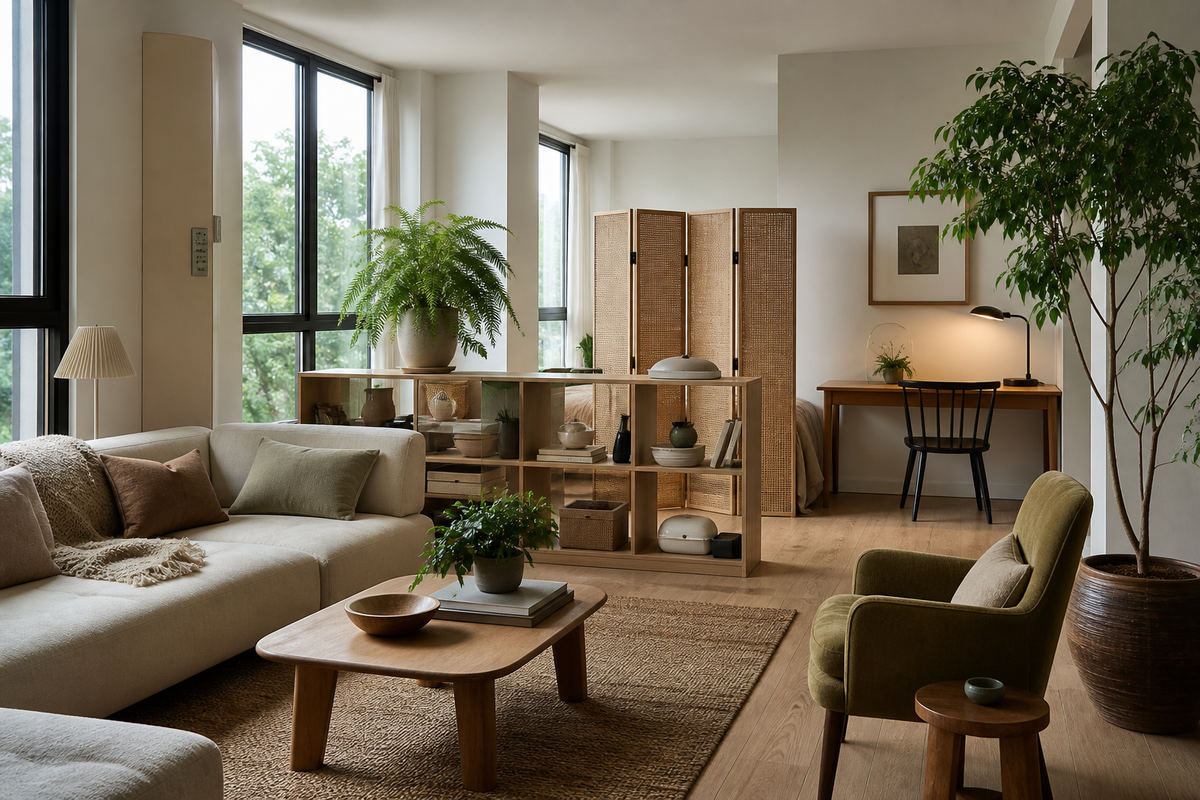
The Thesis: Open Plans Need Edges, Not Walls
Open-plan living is not disappearing, but the best versions in 2026 are becoming less empty and more deliberately zoned. The useful upgrade is not to rebuild every apartment into separate rooms; it is to add flexible edges that tell the eye and the body what each area is for. Recent design coverage around room dividers, adaptive spaces, and the anti open-plan reaction points to the same practical idea: homes work better when a desk, dining table, sofa, and reading corner each have a boundary, even if light and conversation still move through the room.
Why One Big Room Often Feels Like No Room
The promise of an open plan is freedom, but daily life quickly exposes the tradeoff. A laptop on the dining table turns dinner into unfinished work. A sofa placed in the middle of a large rectangle can feel like a waiting area rather than a living room. Children’s toys, chargers, exercise gear, and mail spread because there is no visual cue for where one activity ends. Sound also travels, so a video call competes with cooking and television. The problem is not openness itself. It is the absence of thresholds. People need soft signals that say: this is the focused corner, this is the social zone, this is the reset area.
The Best Dividers Do More Than Divide
A strong divider earns its footprint by solving two or three problems at once. A low open shelf can separate a desk from a lounge area while storing books, routers, baskets, and a table lamp. A woven folding screen can hide an exercise mat during the day and move aside when guests arrive. A ceiling-mounted curtain can create a temporary sleeping nook in a studio without blocking daylight permanently. Built-in joinery is more expensive, but it can divide a living and dining area while adding display space and closed storage. The key is permeability: the divider should create definition without making the room feel smaller or darker than before.
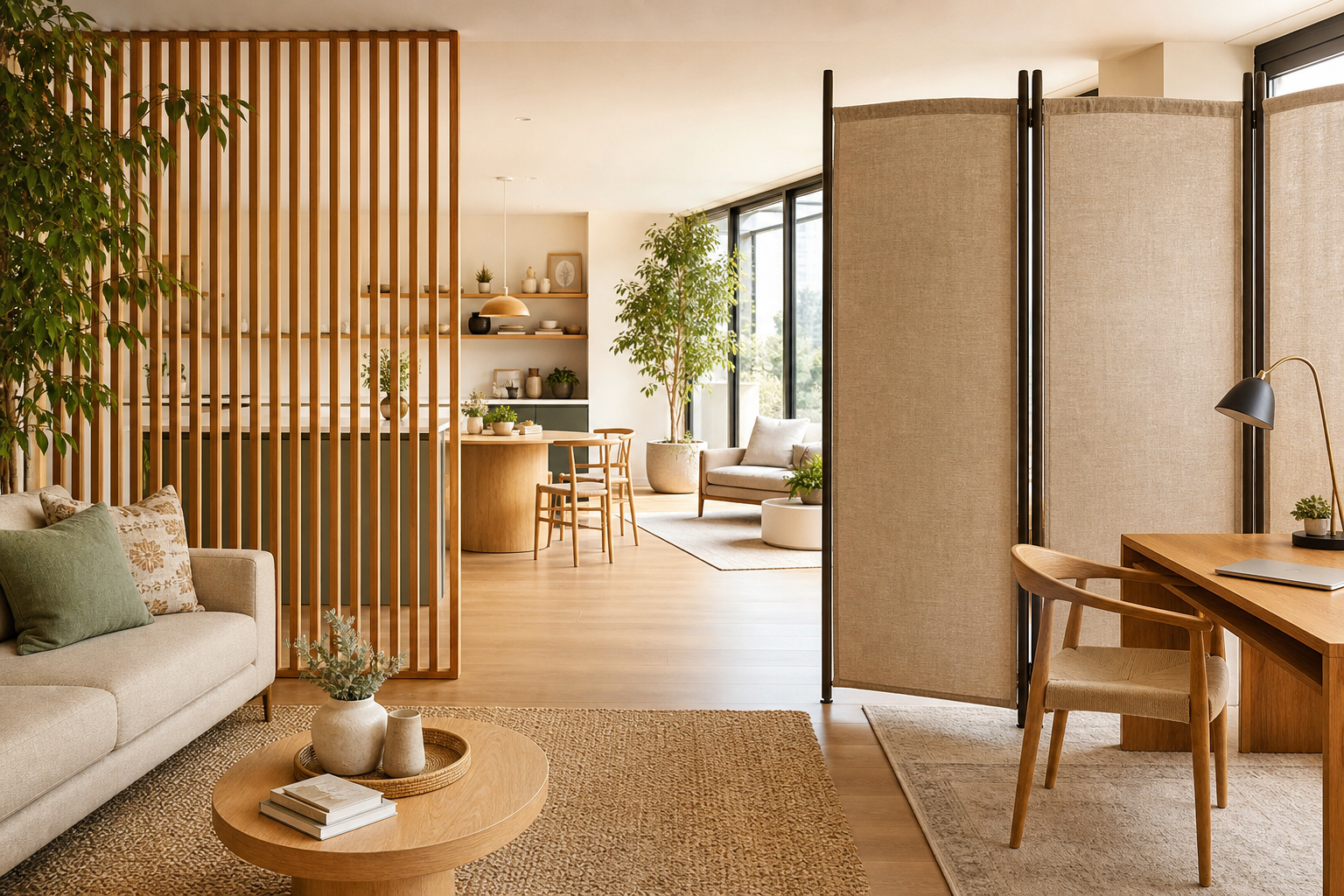
Zoning Starts With Furniture Before Accessories
Before buying a screen, test the layout with furniture you already own. Pull the sofa away from the wall and let its back define the living area. Place a slim console behind it to hold lamps, trays, or plants. Turn a desk so the seated person faces into the room rather than into a blank corner, then place a bookshelf beside it as a visual end point. Rugs can help, but they should support the furniture plan rather than carry the whole job alone. A dining pendant, task lamp, or floor lamp can reinforce a zone, yet lighting works best after the physical layout has decided where people sit, move, and store things.
Tradeoffs: Privacy, Light, Cost, and Flexibility
Every divider makes a choice. Tall storage provides privacy and organization, but it may steal daylight from the far side of the room. Glass partitions preserve brightness, but they can feel formal and may not reduce visual clutter. Curtains are affordable and flexible, but they need enough ceiling height and hardware to look intentional. Folding screens are easy to move, but they can become decorative clutter if they do not have a clear job. The practical approach is to start with the weakest daily moment: the messy work corner, the exposed bed, the noisy television wall, or the undefined entry. Solve that one boundary first, then repeat only if the room still feels confused.
Key Takeaway
Flexible room dividers make open plans work harder because they add purpose without removing openness. Choose dividers that store, filter light, or move when needed; use furniture placement as the first boundary; and judge success by whether daily routines feel easier. A well-zoned room should still feel connected, but no longer feel like every activity is happening in the same place.