Water Leak Sensors Are the Smart Home Upgrade You Hope Never Works
A good leak setup is not about making the home feel futuristic. It is about placing cheap sensors and a reliable shutoff routine where small plumbing failures can become expensive damage.
The Thesis: Put Automation Where Damage Starts
The most useful smart home upgrade may be the one you barely notice: a leak sensor under a washer, sink, water heater, or refrigerator, paired with a shutoff plan that can stop water before a small failure becomes a renovation project. The thesis is simple: smart home value is highest when automation reduces household risk in specific places, not when it adds another dashboard to check every morning.
Start With the Rooms That Fail Quietly
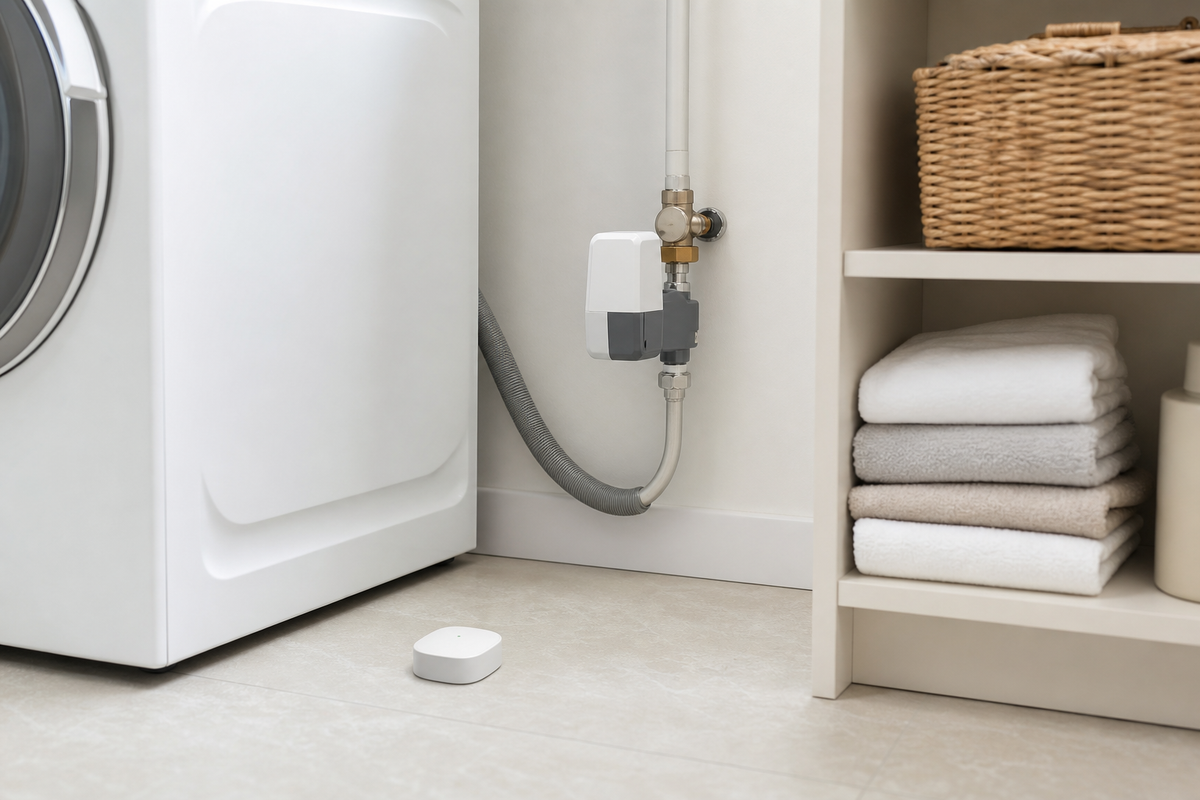
Water damage rarely begins dramatically. A braided washer hose weeps behind the machine. A supply line under a vanity loosens after years of vibration. A water heater pan starts collecting moisture in a closet nobody opens daily. These are ideal locations for small puck-style sensors because the first sign of trouble is often moisture on the floor, not a sound people hear from the next room. A practical setup usually starts with five locations: behind the washing machine, under the kitchen sink, under the primary bathroom sink, beside the water heater, and near any refrigerator or dishwasher water line. Add a label or photo in the household notes so guests, cleaners, or relatives know what the alert means. Basements, sump areas, and utility closets deserve extra attention because leaks there can spread before anyone walks through.
Sensors Are Alerts; Shutoff Is the Safety Net
A sensor alone is useful, but it still assumes someone is awake, reachable, and able to act. That may be enough for an apartment dweller who can run home quickly, but it is weaker during travel, workdays, or sleep. Whole-home automatic shutoff valves change the job: instead of only reporting water, they can close the main line when a flow pattern or paired sensor indicates trouble. The tradeoff is cost and installation. A simple sensor might be inexpensive and renter-friendly; a valve may require a plumber, a suitable main line, and careful testing so normal showers, irrigation, or appliance cycles do not trigger panic. The best choice depends on the home’s risk profile. A second-floor laundry room or vacation property makes a stronger case for shutoff than a single sink over a concrete slab.
Design the Routine Before the Emergency
The setup should be boring on purpose. Name each sensor by its real location, such as “Laundry floor” rather than “Sensor 3.” Send alerts to more than one adult in the household. If a valve can close automatically, define what happens next: who checks the leak, where towels or a wet vacuum are stored, and how to reopen the valve after confirming the source. A good routine also includes maintenance. Test sensors with a damp cloth every few months, replace batteries before long trips, and confirm that the valve still moves freely. If the system depends on Wi-Fi, place sensors where the signal is stable; if it uses a hub, keep the hub on backup power if possible.
Where Not to Over-Automate
Leak protection can become annoying if every splash becomes an emergency. Do not put a sensor where mopping, pet bowls, or shower overspray will cause constant false alarms unless the alert is informational only. Be careful with automatic shutoff rules for homes with medical equipment, irrigation, or appliances that need predictable water access. Also consider privacy and cloud dependence. A leak alert is not as sensitive as a camera feed, but a home safety system should still work reliably when a phone app changes or an internet connection drops. Local audible alarms, multi-channel notifications, and documented manual shutoff steps are valuable backups.
Key Takeaway
Water leak sensors are compelling because they are specific. Place them where plumbing failures start, pair them with a realistic response plan, and consider automatic shutoff where the consequences are high. The goal is not a flashier smart home; it is a quieter one that catches expensive problems early.