Curved Seating Makes Living Rooms Easier to Move Through
Curved seating is useful because it turns a living room from a furniture lineup into a room with better movement, conversation, and visual softness.
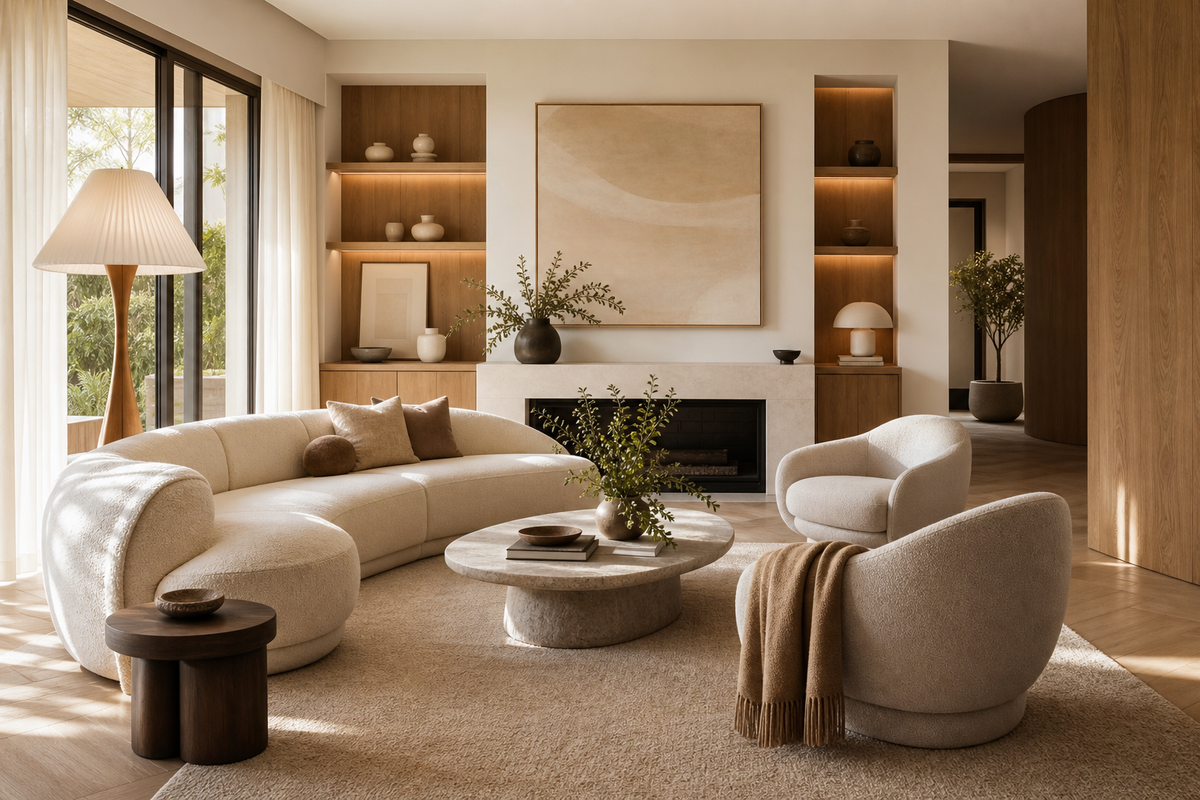
Curved seating is becoming a practical living-room upgrade because it changes how a room works, not just how it looks. A curved sofa, rounded lounge chair, or oval coffee table can soften a boxy plan, improve walking paths, and make conversation feel less staged. The thesis is simple: rounded furniture is most successful when it is treated as a layout tool first and a style statement second.
Why the curve is more than a trend
Straight sofas are efficient, but they often create rigid lines: one wall for seating, one wall for media, and a narrow path squeezed between the coffee table and the television. Curved pieces interrupt that stiffness. They guide the eye around the room and can turn a rectangular living area into a more social zone.
This matters in real homes because many living rooms now do several jobs. The same space may host a movie night, a laptop session, a child's play corner, and guests on the weekend. A subtle curve can make those uses overlap more gracefully. Instead of one long furniture block, the room gains a sense of flow.
Start with circulation, not the showroom photo
The mistake is buying a dramatic crescent sofa because it looks beautiful in a large showroom. In a normal apartment or townhouse, the first question should be movement: can people walk from the entry to the kitchen without dodging sharp furniture corners? Can someone sit down without stepping around a table leg? Can the room still support a side table, lamp, or reading chair?
A useful test is to leave at least thirty inches for main walking paths and more where people pass behind seating. In a small room, one rounded element may be enough. An oval coffee table can improve movement around an existing straight sofa. A rounded accent chair can soften a corner without consuming the footprint of a full curved couch.
Better conversation without a formal layout
Curved seating works especially well when a room feels too media-centered. A sofa with a gentle arc naturally turns people toward one another, while two rounded chairs can create a small conversational pocket beside a fireplace, window, or bookshelf. The result feels relaxed because guests are not lined up like an audience.
For example, a long narrow living room might keep a straight sofa on one wall but add a round pedestal table and two swivel chairs near the window. A square room might use a curved sectional to define the lounge area without needing a heavy room divider. The goal is not symmetry. It is to make the room easier to enter, sit in, and leave.
Tradeoffs: scale, upholstery, and flexibility
Curved furniture has real tradeoffs. It can be harder to place against walls, and some curved sofas waste space if the back arc is too deep. Large sculptural pieces may also limit future rearranging. If you move often or like changing layouts, start with smaller rounded items: a chair, ottoman, side table, or coffee table.
Upholstery matters too. Boucle and nubby fabrics emphasize the soft shape, but they can collect lint and may not be ideal for pets. Smooth performance fabric is more forgiving for daily use. In a minimalist room, a curved piece can become the focal point; in a busy room, too many rounded forms can feel novelty-driven. Balance the curve with simple shelves, clean window treatments, and quiet rugs.
How to make it feel intentional
Curved seating looks best when the rest of the room responds to it. Repeat the shape lightly: an oval tray, a rounded lamp shade, a circular side table, or artwork with softer geometry. Do not make every item round. A few straight lines are needed to keep the room grounded.
Placement is the final detail. Pull curved pieces slightly away from the wall when possible, because their shape is meant to be seen. Use a rug large enough to hold the front legs of the seating so the arrangement reads as one zone. If the room includes a television, angle the curved piece so conversation and viewing both work instead of forcing one to dominate.
Key Takeaway
Curved seating is not only a 2026 style cue; it is a practical way to improve circulation, conversation, and softness in everyday living rooms. Start with the room's walking paths, choose one rounded piece that solves a real layout problem, and let the rest of the design support it quietly.