Air Quality Automations Make Smart HVAC Feel Practical
Indoor air quality automations are a practical smart-home upgrade because they turn hidden CO2, humidity, VOC, and particle data into small HVAC actions before a room feels stale.
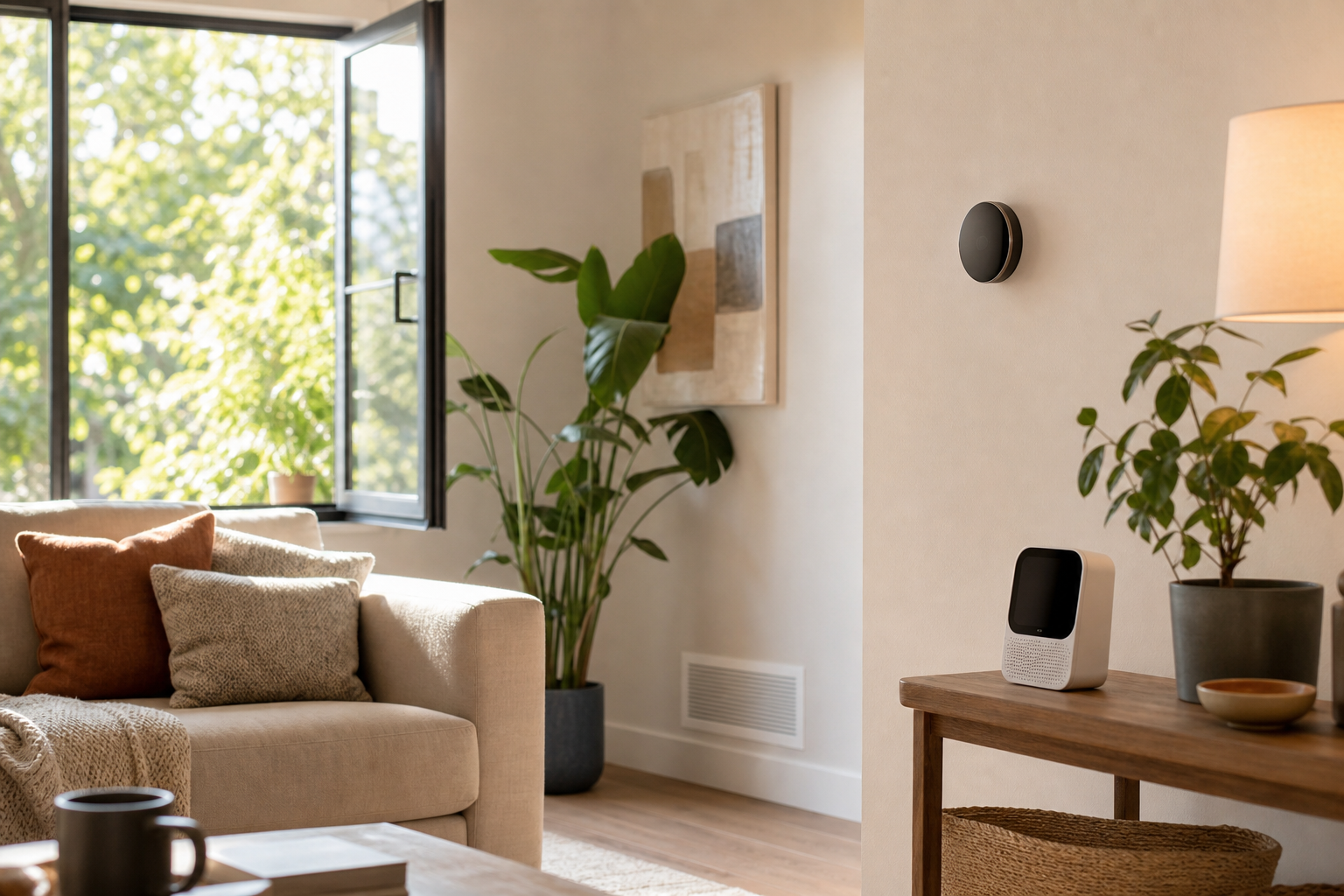
Smart HVAC becomes genuinely useful when it reacts to the air people are actually breathing, not just to a temperature number on the wall. The practical opportunity in 2026 is to connect indoor air quality readings such as CO2, humidity, VOCs, and fine particles to modest ventilation and fan routines, so a home corrects stale or uncomfortable rooms before anyone has to open an app.
Why air quality is a better automation trigger
Temperature is easy to understand, but it is a blunt signal. A home office can be seventy-two degrees and still feel heavy after two people spend an hour on video calls. A bedroom can be cool enough but too humid after an evening shower. A kitchen can recover from cooking smells faster if the system knows that VOCs or particles are elevated, rather than waiting for someone to notice.
That makes air quality a useful middle layer between comfort and energy use. A dedicated monitor or thermostat sensor can watch for CO2, humidity, VOCs, PM2.5, or a combined air quality score. The automation does not need to be dramatic. It can run the HVAC fan for fifteen minutes, boost a fresh-air ventilator, start an air purifier, or send a reminder to crack a window when outdoor conditions are reasonable.
Start with rooms where the signal matters
The best first rooms are not always the largest rooms. A home office, nursery, bedroom, finished basement, and kitchen often produce clearer payoffs than a central hallway. In a home office, rising CO2 can signal that concentration may start to slip before the person at the desk feels tired. In a bedroom, humidity trends can explain why a room feels clammy even when the thermostat says the temperature is right. In a kitchen, particle or VOC readings can help decide when a purifier should run after cooking.
Placement matters. A monitor hidden behind books or placed beside a sunny window may give misleading readings. A practical setup keeps the sensor at breathing height, away from direct vents, and close enough to the activity that causes the problem. If only one sensor is available, put it in the room where people spend long uninterrupted blocks of time.
Useful routines should be small and reversible
Air quality automations work best when they behave like a thoughtful housemate, not an overactive building manager. A CO2 threshold might trigger a fan cycle during work hours, but it should stop after a short period and check again. A humidity rule might run a bathroom fan until the room returns near baseline, with a maximum runtime to avoid noise or wasted energy. A kitchen particle spike might start an air purifier at medium speed, then step down automatically.
The tradeoff is that ventilation and filtration cost something. Fans use power, open windows can fight heating or cooling, and purifiers create noise. That is why simple guardrails matter: time limits, quiet hours, occupancy awareness, and seasonal modes. A summer rule might prioritize dehumidification. A winter rule might avoid excessive fresh-air exchange unless CO2 is high for a sustained period.
Do not overtrust the dashboard
Consumer air quality numbers are useful, but they are not laboratory measurements. VOC sensors can react differently to cleaning products, cooking, new furniture, or candles. CO2 estimates may drift. Humidity is straightforward, but the right target depends on climate, building envelope, and comfort preferences. The point is not to chase a perfect score. The point is to make repeated patterns visible enough to guide better routines.
Watch trends for one week before enabling aggressive automation. If the bedroom spikes every night, adjust ventilation or fan timing. If the office only crosses a threshold during meetings, schedule a pre-meeting fan cycle. If the kitchen takes two hours to recover after cooking, pair the range hood habit with a purifier routine.
A practical setup path
Start with one reliable monitor and one action device. That could be an air quality sensor plus a smart plug for a purifier, or a thermostat that can run the fan independently. Create one rule, name it plainly, and test it for a week. Then add context: time of day, room occupancy, outdoor weather, or a maximum runtime.
The strongest setups are boring. They reduce stale air during calls, keep humidity from lingering, and clear cooking particles without asking anyone to manage another dashboard.
Key Takeaway
Indoor air quality is becoming one of the most practical smart-home signals because it turns invisible comfort problems into small, limited HVAC and filtration actions. Start with one room, one sensor, and one reversible routine; the goal is not a perfect dashboard score, but a home that feels fresher with less manual attention.